Helping small businesses scale by reimagining how products are sold
As the lead designer, I took product bundles from research to launch, letting HubSpot sales reps add a full package of products to a quote in one step. Bundles shipped to all HubSpot customers across Quotes, Subscriptions, Invoices, and Payment Links.
+20%
faster quote building
+15%
product catalog use
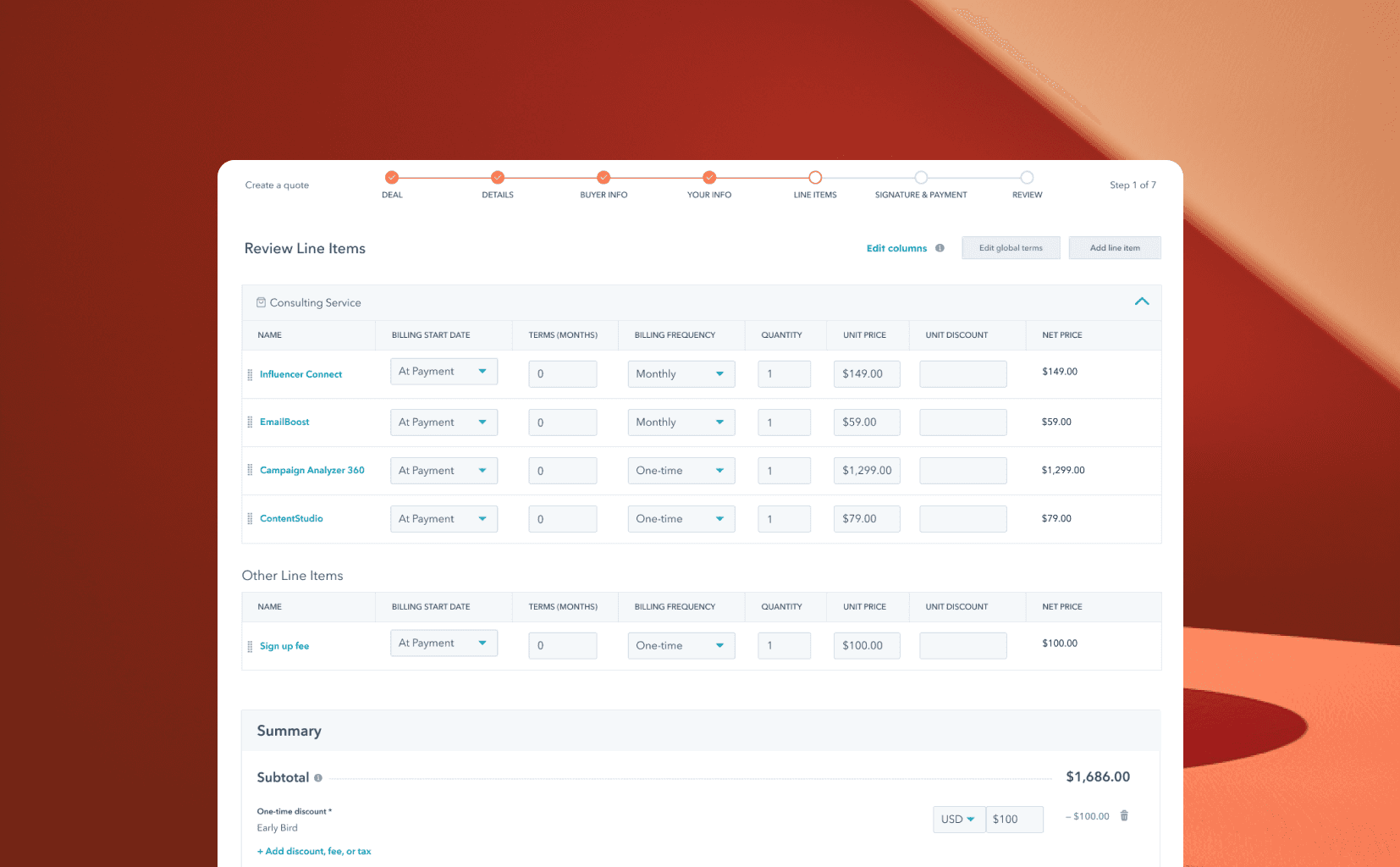
How do you help sales reps quote multiple products at once, without adding them one by one?
When I joined HubSpot, the Commerce billing platform only allowed sales reps to sell through a single path. Customers created a single product or service, then manually added it into a sales tool. For small businesses starting out, this was how most of them sell. But through research, I discovered that reps struggled with the ability to sell in packages, and the existing workflow simply didn’t scale as our customers grew.
We set out with a clear goal to help customers sell more efficiently and unlock growth. Our hypothesis was this: If we could streamline the quoting process, reps would close deals faster, average transaction sizes would increase, and businesses could package their products in ways that actually matched how they sold in the real world.
Research
Over three weeks, I interviewed customers to understand how admins and reps currently sell. Three pain points came up again and again:
Hard to scale: Packaging products was common but difficult to manage.
Takes too long: Adding products one by one slowed down quoting and invoicing.
Error-prone: With so many SKUs, reps double-checked prices in spreadsheets.
This shaped our guiding question: How might we let reps add a full package of products to a quote as easily as a single product?
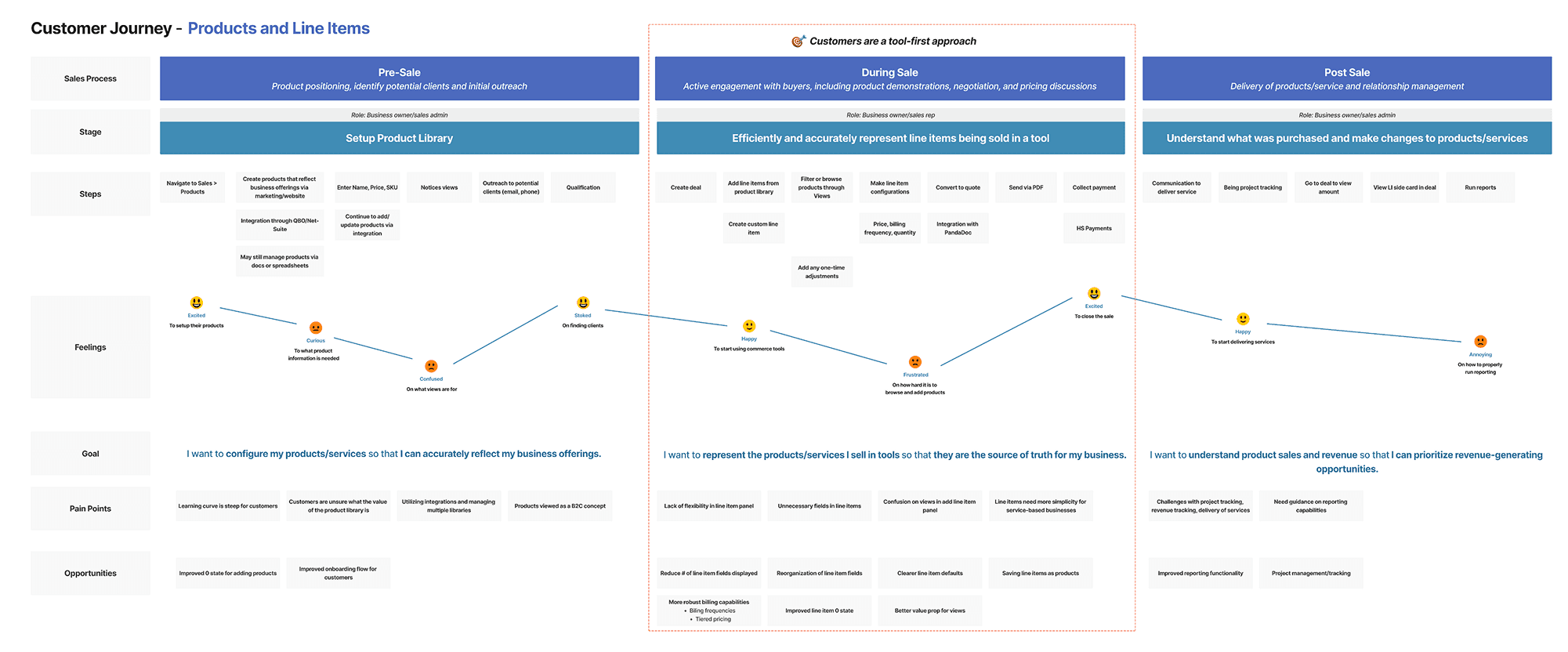
The friction was in the sale, not the setup
I mapped the sales journey with my PM and engineering team and found the biggest friction was adding products during the sale, not setting them up beforehand. I explored three directions: reusing existing product folders, CRM views, and product bundles. I pushed for bundles because a bundle could be built once and used in every sales tool, even as catalogs grew. The trade-off was building one shared data model across four sales tools. I also experimented with an AI concept that built bundles automatically from CRM data, but cut it from the first release because its suggestions weren’t accurate enough to trust with pricing. I took the bundles direction from early concepts to high-fidelity prototypes ready for testing.

Validation
Across 2 rounds of usability testing with sales reps from various business sizes, every participant completed the core tasks. Reps said bundling would save them time and make upselling easier. Their feedback shaped the final details, and we shipped product bundles to all HubSpot customers.
This is what we are looking for. This is really great and we no longer need to juggle between spreadsheets.
Every time we quote someone, we have to add line items. This would be a time-saver.
This has been our biggest ask. Adding products one by one gets old fast when you’re always selling the same sets.
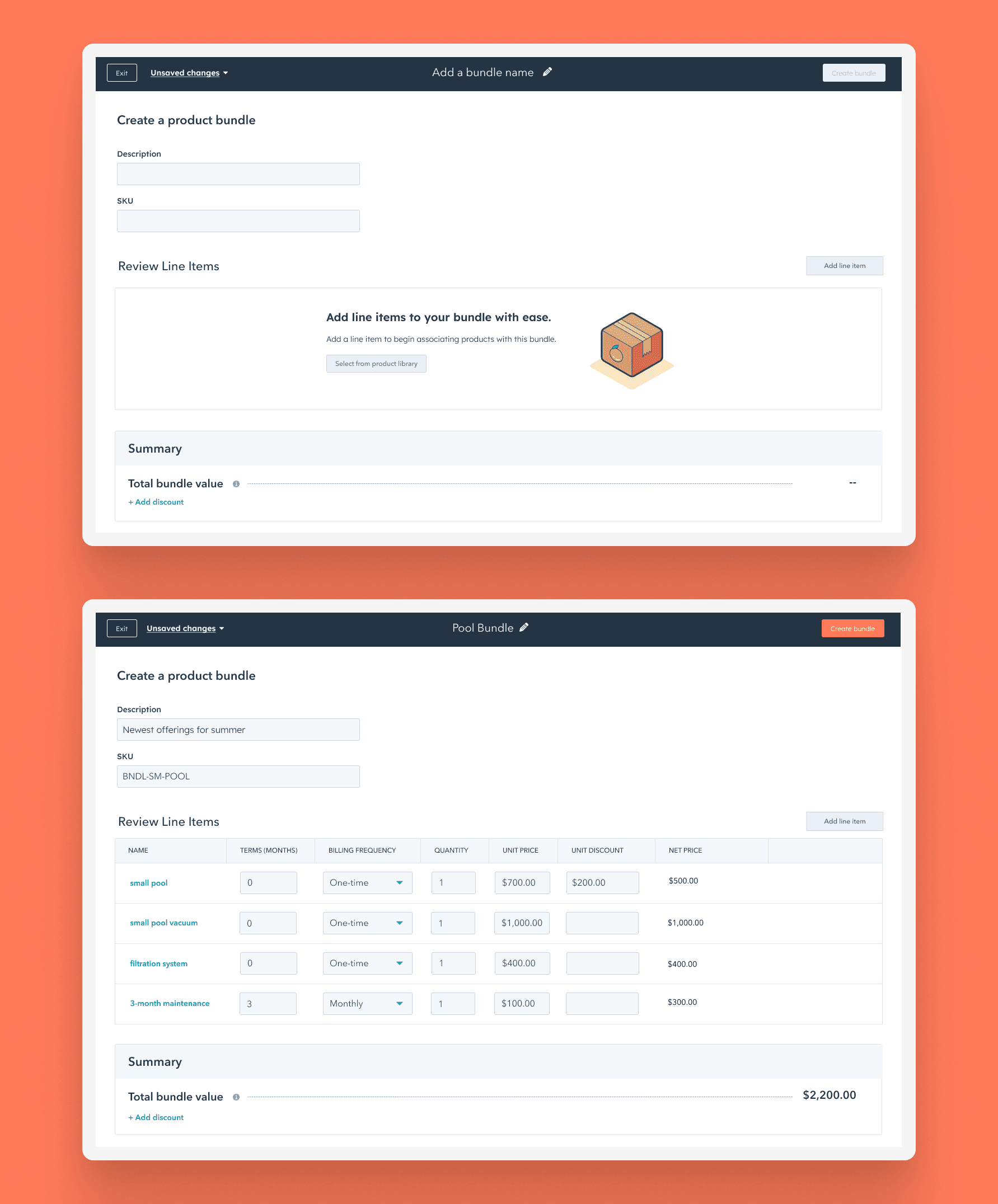
Bundles creation
The bundle editor gives sales teams one place to package what they sell. Reps pull items from the product library, add discounts, and customize a bundle for each buyer. Since every bundle is built in the same place, it stays consistent everywhere it’s used.
Bundles display
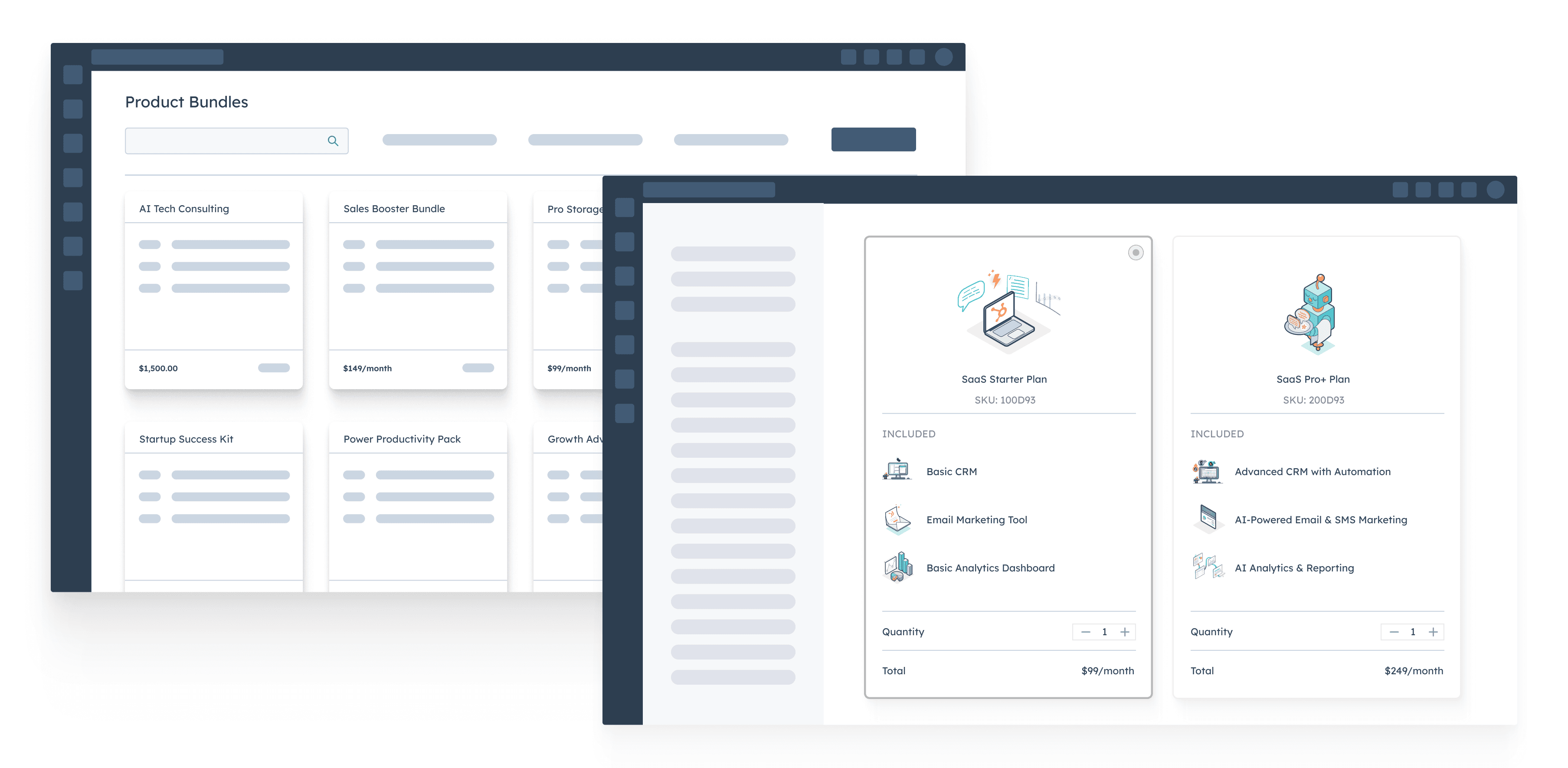
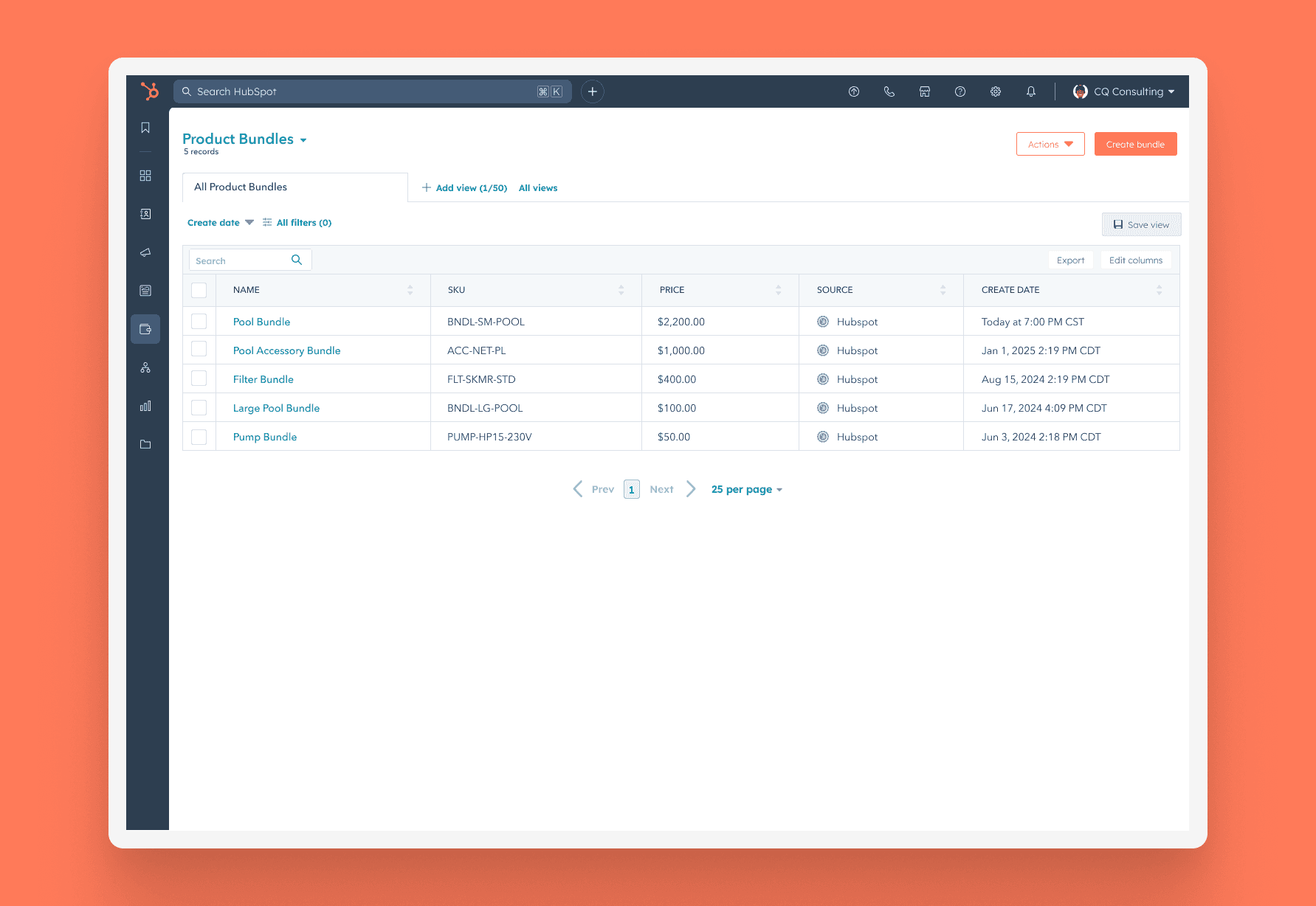
All bundles live in one space in the CRM, pulled from the same product data. Teams can search, filter, and save views, and when a product changes, everyone sees the update.
Built once, used everywhere
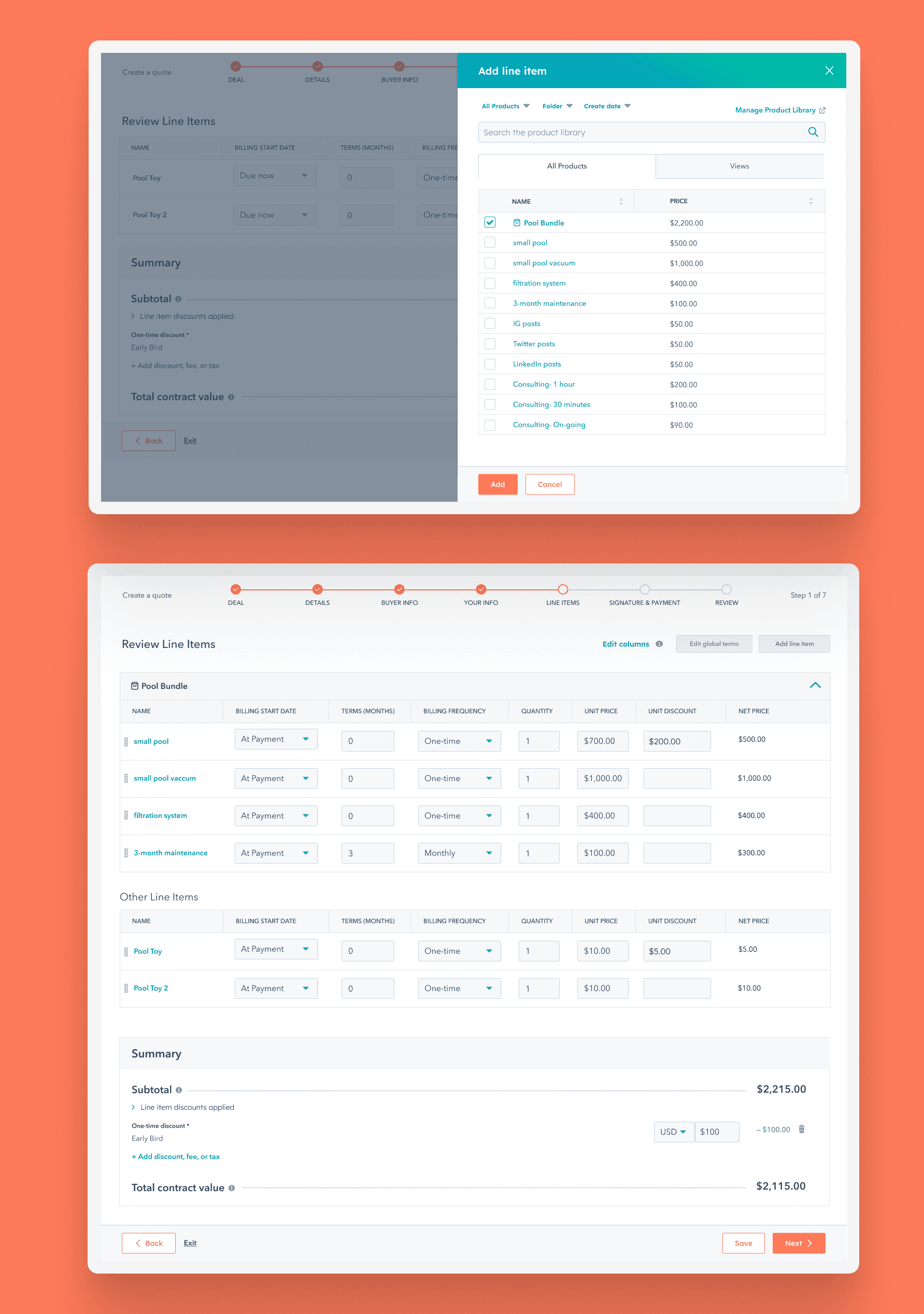
Reps can add bundles in every sales tool: Deals, Quotes, Subscriptions, Invoices, and Payment Links. Buyers see what each bundle includes, which makes their decision clearer and upselling easier for merchants.
Speed only matters if the work holds up
Products touch almost every part of HubSpot’s CRM, so getting bundles right meant thinking about the whole system, not just one screen. By focusing on the reps needs I was able prioritize the core jobswith the most impact, from where reps first create a bundle to how it shows up in every sales tool.
Another thing that stood out to me was that early feedback let me move quickly. AI tools sped up my own design work, but speed only matters if the work holds up. What carried this project to launch was close collaboration with my PM, engineers, and the teams who owned each sales tool. Bundles shipped because every team treated it as their own.